
Digital monitoring platforms have become a core component of modern industrial operations. Facilities now generate vast amounts of operational data from sensors, smart meters, control systems, and connected equipment. These technologies allow organizations to track performance, detect faults, and improve efficiency in real time. Businesses evaluating infrastructure upgrades often consider solutions that complement commercial electrical service in Delaware County because monitoring capabilities are increasingly linked to electrical reliability, energy management, and long-term asset performance.
Research from McKinsey & Company shows that digital technologies and advanced analytics can significantly improve asset productivity while reducing maintenance costs. At the same time, the growth of industrial internet-connected devices continues to expand the amount of operational data available to facility managers and engineers. These developments have accelerated the adoption of digital monitoring systems across energy, manufacturing, transportation, and commercial infrastructure projects.
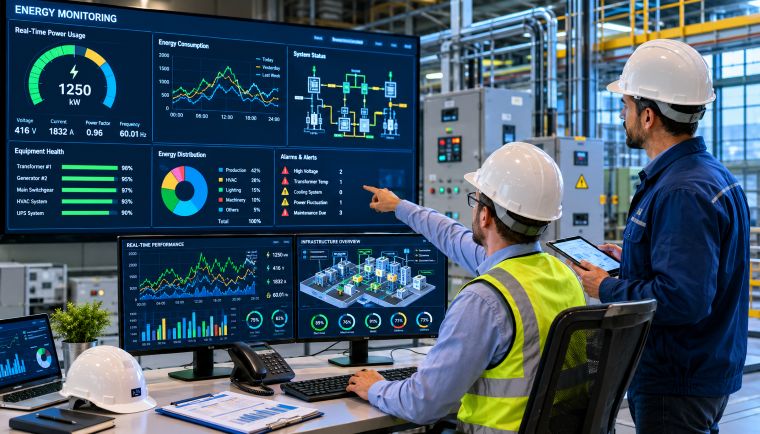
Emerging Monitoring Technologies Reshaping Infrastructure Management
Modern monitoring systems combine hardware, software, and communication networks to create continuous visibility into asset performance. Sensors installed throughout facilities collect information on temperature, voltage, vibration, energy consumption, pressure, and environmental conditions. Data is transmitted to centralized platforms where operators can review performance through dashboards and automated alerts.
International Energy Agency (IEA) reports that digitalization is becoming an increasingly important factor in improving energy efficiency and operational performance across industrial sectors. Connected technologies allow organizations to move beyond periodic inspections and adopt continuous monitoring approaches.
Several technologies are driving this transformation:
- Internet of Things (IoT) sensors for real-time equipment monitoring.
- Cloud-based analytics platforms for centralized data management.
- Artificial intelligence tools that identify performance trends.
- Digital twins that create virtual representations of physical assets.
- Smart electrical meters that provide detailed energy usage insights.
These tools help organizations understand how systems perform under actual operating conditions rather than relying solely on historical records or scheduled inspections.
Real-Time Asset Management Benefits
The most significant advantage of digital monitoring systems is real-time visibility. Traditional maintenance models often depend on routine inspections or reactive repairs after failures occur. Digital monitoring changes this approach by providing immediate information about developing issues.
Deloitte notes that predictive maintenance strategies supported by connected technologies can reduce equipment downtime and improve operational reliability. When sensors identify abnormal patterns such as unusual vibration, overheating, or power fluctuations, maintenance teams can investigate before a major failure occurs.
Real-time monitoring offers several practical benefits:
- Faster identification of equipment issues.
- Reduced unplanned downtime.
- Improved worker safety.
- More accurate maintenance scheduling.
- Better energy efficiency management.
- Extended equipment lifespan.
Energy management is particularly important. Smart monitoring systems allow facility operators to identify inefficient equipment, excessive power consumption, and peak-demand events. Data from U.S. Department of Energy indicates that energy monitoring and optimization strategies can contribute significantly to industrial energy savings.
Instead of waiting for monthly utility reports, organizations can view energy performance in real time and make adjustments when inefficiencies appear.
Applications Across Industrial and Commercial Environments
Digital monitoring systems are now common across a wide range of industries. Manufacturing facilities use them to monitor production equipment, detect operational anomalies, and improve maintenance planning. Utilities deploy monitoring technologies to manage power distribution networks and improve grid reliability.
The transportation sector increasingly relies on connected infrastructure to monitor bridges, tunnels, rail systems, and traffic management equipment. Structural sensors provide information about stress, movement, and environmental conditions, helping engineers evaluate long-term infrastructure health.
Commercial buildings have also become major users of monitoring technology. Building automation systems integrate lighting controls, HVAC equipment, electrical systems, security platforms, and occupancy sensors into a single management interface. Similar trends are appearing in other service-based industries, where technology-driven operational improvements are helping organizations streamline logistics, improve efficiency, and gain better visibility into daily operations.
U.S. Environmental Protection Agency ENERGY STAR resources highlight the value of monitoring energy consumption in commercial buildings as a way to identify opportunities for improved efficiency. Facility managers can track energy use patterns, compare building performance, and implement targeted improvements.
Healthcare facilities, educational institutions, data centers, and retail environments increasingly depend on these technologies because uninterrupted operations are essential. Real-time monitoring helps identify potential issues before they affect critical services.
The Connection to Modern Electrical Infrastructure
Electrical systems serve as the foundation for most monitoring platforms. Reliable power distribution, smart metering, and advanced control systems are necessary for collecting accurate operational data.
Many organizations investing in monitoring technologies discover that electrical infrastructure upgrades are required to support connected devices and communication networks. Aging electrical systems may lack the capacity, reliability, or integration capabilities needed for modern monitoring applications.
Electrical contractors and infrastructure specialists play an important role in implementing these projects. Their responsibilities often include installing smart meters, integrating monitoring equipment, upgrading distribution systems, and ensuring compliance with safety standards.
As facilities become more connected, electrical systems are evolving from simple power delivery networks into intelligent operational platforms. Monitoring data, energy analytics, and automated controls now work together to support business objectives.
This shift is particularly relevant for commercial properties, industrial facilities, and infrastructure projects where electrical reliability directly affects productivity, safety, and operating costs.
Challenges and Considerations
Despite their benefits, digital monitoring systems present several implementation challenges. Cybersecurity remains a major concern because connected assets can create additional points of vulnerability.
National Institute of Standards and Technology (NIST) emphasizes the importance of securing industrial control systems through risk management, network protection, and continuous monitoring practices. Organizations must balance connectivity with security to protect operational technology environments.
Data management is another challenge. Large facilities may generate millions of data points every day. Collecting information is only the first step. Organizations must also establish processes for analyzing, interpreting, and acting on that data.
Workforce training is equally important. Engineers, facility managers, and maintenance teams need the skills to interpret monitoring results and respond appropriately. Technology alone cannot deliver results without knowledgeable personnel who understand how to use the information effectively.
Future Developments in Digital Monitoring
The next generation of monitoring systems will likely become more predictive, automated, and interconnected. Artificial intelligence is expected to play a larger role in identifying performance trends and recommending maintenance actions.
Research from World Economic Forum suggests that digital transformation technologies will continue to reshape industrial operations by improving efficiency, resilience, and sustainability. Future platforms may automatically adjust operating parameters based on real-time conditions while reducing the need for manual intervention.
Digital twin technology is also expected to expand. By creating virtual models of physical assets, organizations can simulate operational scenarios, evaluate maintenance strategies, and optimize performance before implementing changes in the real world.
Advanced energy monitoring systems will likely become more integrated with renewable energy resources, battery storage technologies, and smart grid infrastructure. This integration can help organizations improve energy resilience while supporting sustainability objectives.
Conclusion
Digital monitoring systems have moved from optional technology investments to essential infrastructure tools. Real-time visibility, predictive maintenance capabilities, and advanced energy analytics help organizations improve reliability, efficiency, and operational performance. Industrial facilities, commercial properties, and infrastructure operators increasingly rely on intelligent monitoring solutions to manage complex systems and reduce risk.
As connected technologies continue to evolve, organizations will gain access to more sophisticated asset management capabilities. Smart electrical infrastructure, advanced analytics, and integrated facility monitoring are expected to play a growing role in supporting resilient and efficient operations. The continued development of intelligent power management, connected monitoring networks, and predictive maintenance platforms will shape the future of industrial energy and infrastructure projects for years to come.