
Keeping a tidier home without the hassle is the dream of many homeowners. Home clean requires consistent effort. Luckily, modern technology is changing how households manage everyday cleaning. Repetitive tasks such as vacuuming, mopping, dusting, and monitoring cleaning routines can consume significant amounts of time, particularly for people balancing work, school, family responsibilities, and other commitments.
Automated devices and connected applications now provide ways to reduce some of this workload. While technology cannot eliminate the need for household maintenance, it can make routine cleaning more convenient and easier to manage.
Robotic Cleaners take care of Routine Floor Maintenance
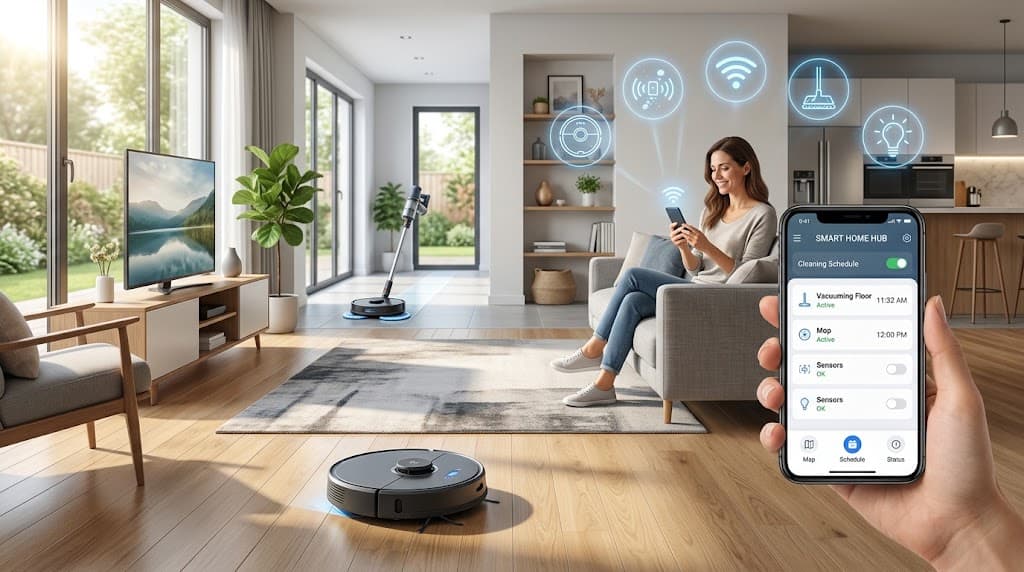
Robotic vacuum cleaners and automated mops are among the most recognizable examples of technology being applied to household cleaning. These devices are designed to perform routine floor maintenance with limited human involvement. Depending on the model, a robotic cleaner can use sensors, cameras, mapping technology, or other navigation systems to move around furniture and identify areas that require attention.
Some newer models can create digital maps of rooms and allow users to establish cleaning schedules. Instead of manually vacuuming every day, homeowners can program the device to operate at selected times.
These devices are particularly useful for managing everyday dust, crumbs, pet hair, and other surface debris. However, they generally complement rather than replace conventional cleaning. Stairs, narrow spaces, furniture surfaces, and heavily soiled areas may still require manual attention.
Smart Appliances make Cleaning more Efficient
Technology is also being incorporated into appliances that traditionally require regular maintenance. Modern washing machines, dishwashers, and dryers can include sensors and automated programs designed to optimize specific cleaning cycles.
For example, some washing machines can adjust water levels or cycle settings based on the load. Dishwashers may use sensors to determine how heavily soiled dishes are and modify the washing process accordingly. Smart appliances can also provide notifications through connected applications, allowing homeowners to monitor cycles without repeatedly checking the machine.
These features can simplify household routines by reducing the number of decisions users need to make during everyday chores. They may also help households use resources more efficiently when the appliance is designed to adjust its operation according to the task.
Apps Turn Cleaning into a Manageable Routine
Cleaning technology is not limited to physical devices. Mobile applications can help homeowners organize chores, establish schedules, and track maintenance activities. This can be particularly useful in larger households where different tasks need to be completed at different intervals.
A cleaning application or digital calendar can be used to schedule activities such as vacuuming, changing bedding, cleaning bathrooms, washing appliances, or replacing filters.
Some connected cleaning devices can also send alerts when a task has been completed or when maintenance is required.
By turning cleaning into a scheduled routine, technology can reduce the likelihood of household chores being forgotten. Instead of relying entirely on memory, homeowners can use automated reminders and device notifications to keep maintenance organized.
Automation and Professional Cleaning can Work Together
Automated cleaning technology does not make professional cleaning services obsolete. Instead, the two approaches can address different levels of household maintenance. Robotic vacuums and smart appliances are well suited to repetitive, routine tasks, while professional cleaners can handle more detailed or specialized work.
A good application of this is like when robotic vacuum maintain floors between professional visits, while professional cleaners can concentrate on deep-cleaning carpets, bathrooms, kitchens, windows, and difficult-to-reach areas. This division of responsibilities can make professional cleaning more effective because routine surface maintenance is being handled more consistently.
Technology can therefore serve as a supporting system rather than a complete replacement for human expertise. Professional cleaners can also work around automated devices and household preferences when developing an appropriate cleaning routine.
Using Technology to Reduce the Household Cleaning Burden
The biggest advantage of cleaning technology is not that it makes cleaning unnecessary. Its value comes from reducing repetitive work and making household maintenance easier to organize. Robotic cleaners can handle routine floor care, smart appliances can automate portions of washing and cleaning cycles, and mobile applications can help homeowners maintain consistent schedules.
However, these tools work best when used realistically. Devices need to be maintained, sensors and filters may require cleaning, and automated equipment cannot reach every surface. Homeowners still need to inspect their living spaces and address tasks that technology cannot perform.
The combination of automation and human effort provides a more practical approach to modern housekeeping. Technology can take care of predictable, repetitive tasks while homeowners and professional cleaners focus on areas requiring judgment, precision, or specialized equipment. As smart home technology continues to develop, everyday cleaning is likely to become increasingly integrated with automated systems, giving households more control over their time without sacrificing the cleanliness and maintenance their homes require.